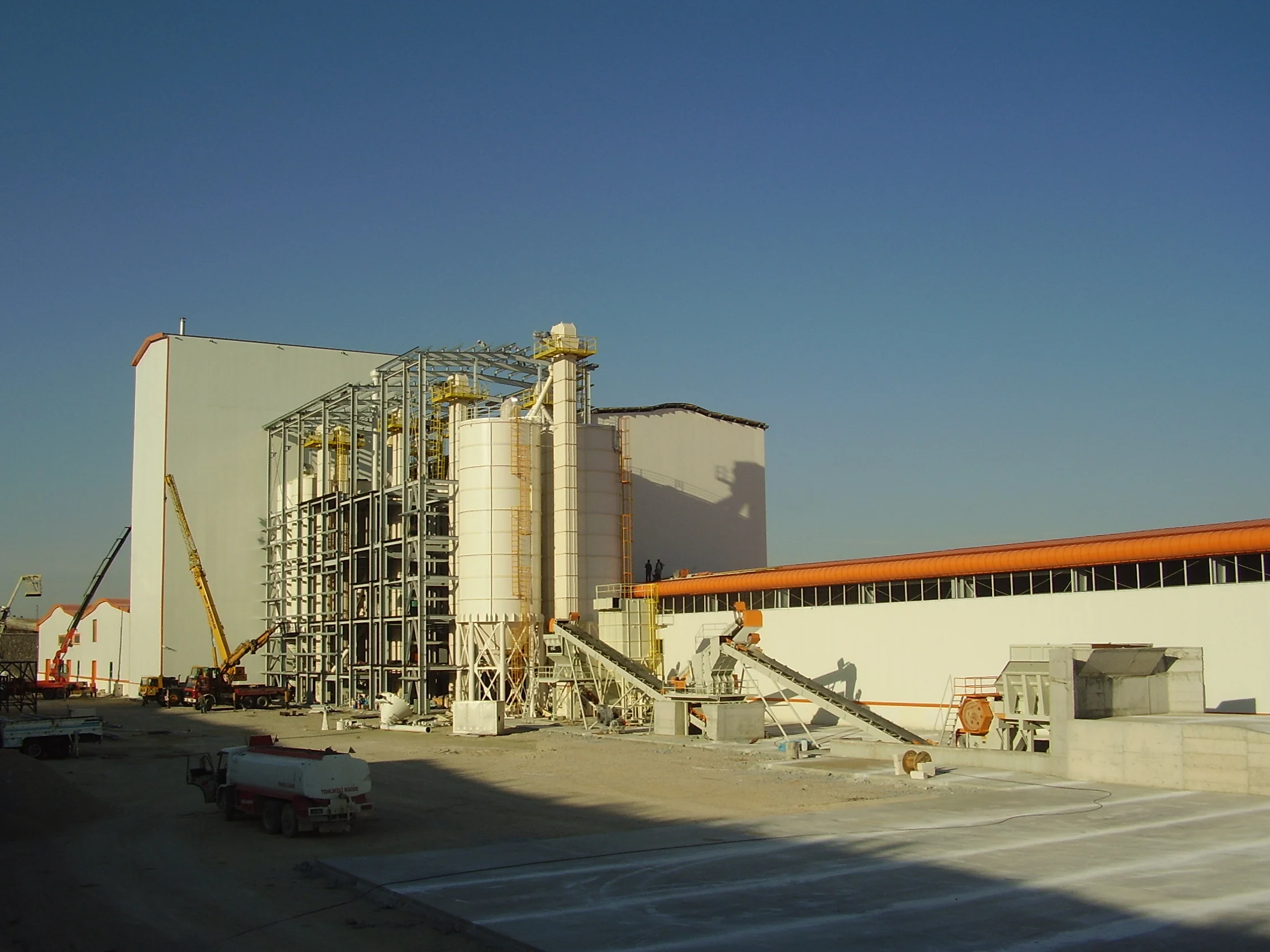
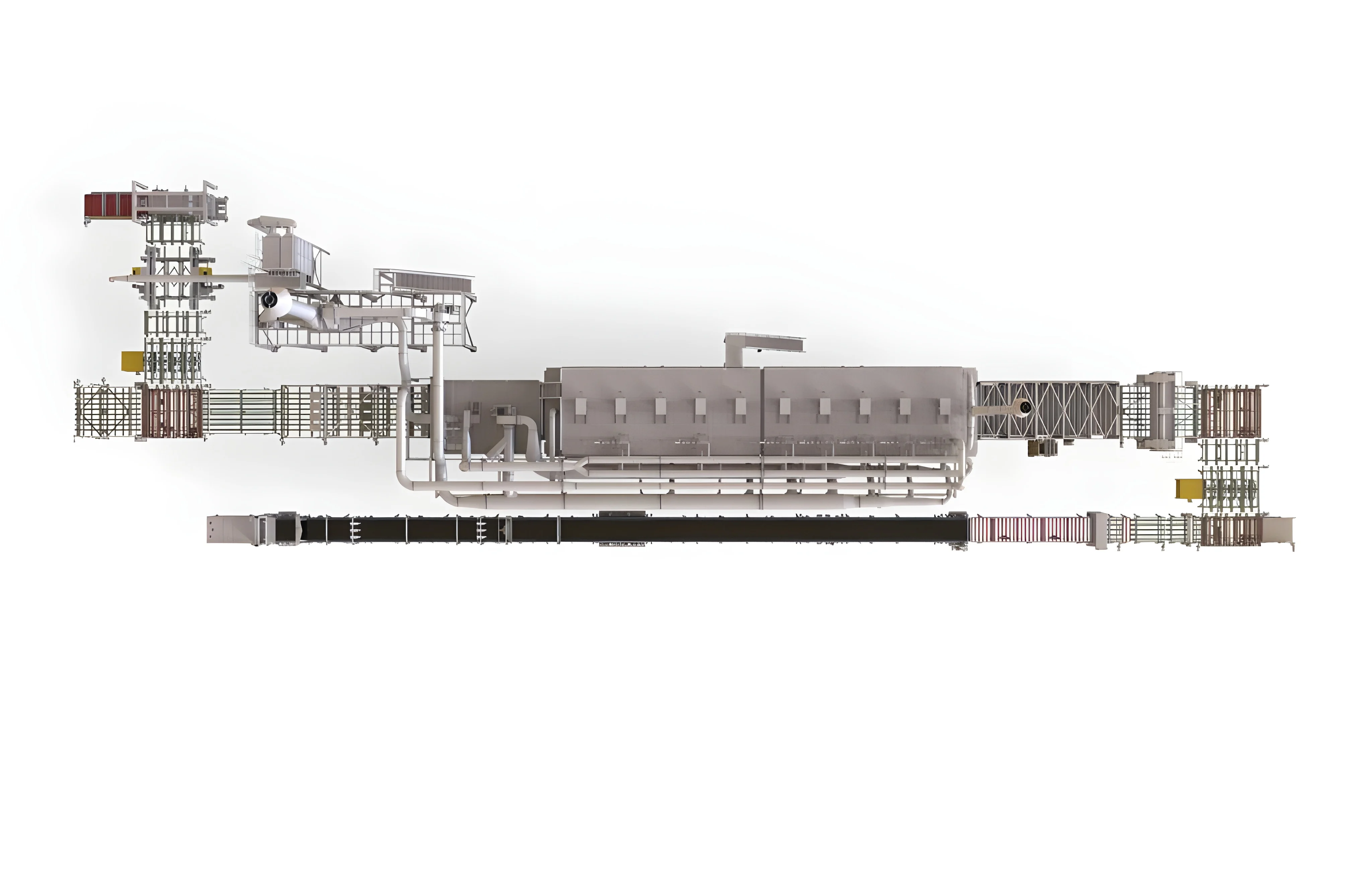
An integrated production facility that converts raw gypsum into reactive stucco through controlled drying and dehydration, combining feeding, calciner, gas cleaning, cooling, grinding, storage and automation.
Turnkey Gypsum Production Plants
Complete Solutions for Gypsum Production
From raw material preparation and calcination to cooling and gypsum board production — integrated, efficient, and sustainable gypsum plants engineered with a process-focused approach.
1,000 t/day
Calcination capacity
80–85% β
Controlled product phase
6–18.5 t/h
Vertical kiln capacity
6
Languages
* Capacity and product-phase figures are verified during engineering against feedstock, fuel, product recipe and project conditions.
Contents
Explore a gypsum plant in the right decision sequence.
Follow the production chain from feedstock to finished product through process logic, technology selection and ENIVO engineering.
Plant Architecture
What is a gypsum production plant and how is it structured?
A gypsum production plant is an industrial system in which raw-material receiving, preparation, thermal conversion, cooling, grinding, additive dosing, mixing and packing are managed around one process objective. A reliable plant is not a collection of machines; it is an integrated architecture in which material flow, energy use, quality control and automation are engineered together.
01
Feedstock profile
Natural, synthetic or validated recycled gypsum is assessed for moisture, purity, particle distribution and impurities.
02
Thermal conversion
Drying, calcination and cooling are managed within one thermal window to protect the target hemihydrate structure and setting behaviour.
03
Finished product
The line is completed with grinding, recipe, dosing and packing systems required for plaster, dry-mix products or plasterboard.
 ENIVO / ENGINEERING
ENIVO
Why choose ENIVO for a turnkey gypsum production plant?
With ENIVO, gypsum production plants can be designed as complete, integrated systems from a single source. From raw material preparation and calcination to cooling, mixing and bagging, every stage is engineered to deliver reliable operation and the required product quality.
From sample analysis to process designFrom equipment interfaces to automationFrom commissioning to operator training
Bring your project to life with ENIVO engineers enivosystems.com
Request a Quote enivosystems.com Explore Plant Types
Production Process
Features
1Crushing, screening, and material conveying systems
2Calcination processes
3Calcined gypsum cooling
4Grinding and separating
Process Intelligence
What is gypsum calcination?
Calcination removes a controlled share of the crystal water in gypsum to produce reactive calcium sulfate hemihydrate. The result is not governed by temperature alone: feed moisture and mineralogy, particle size, heat transfer, residence time and cooling conditions together define phase distribution and final product behaviour.
01
Stable feeding
Changes in moisture and particle size directly affect the kiln heat load and the time material spends in the process.
02
Thermal window
Gas, product and outlet temperatures are evaluated together with residence time, pressure and the air-to-fuel balance.
03
Phase verification
Hemihydrate, dihydrate and anhydrite balance is checked with fineness, setting, spread and strength targets.
 ENIVO / ENGINEERING
ENIVO
How does ENIVO engineer a calcination line?
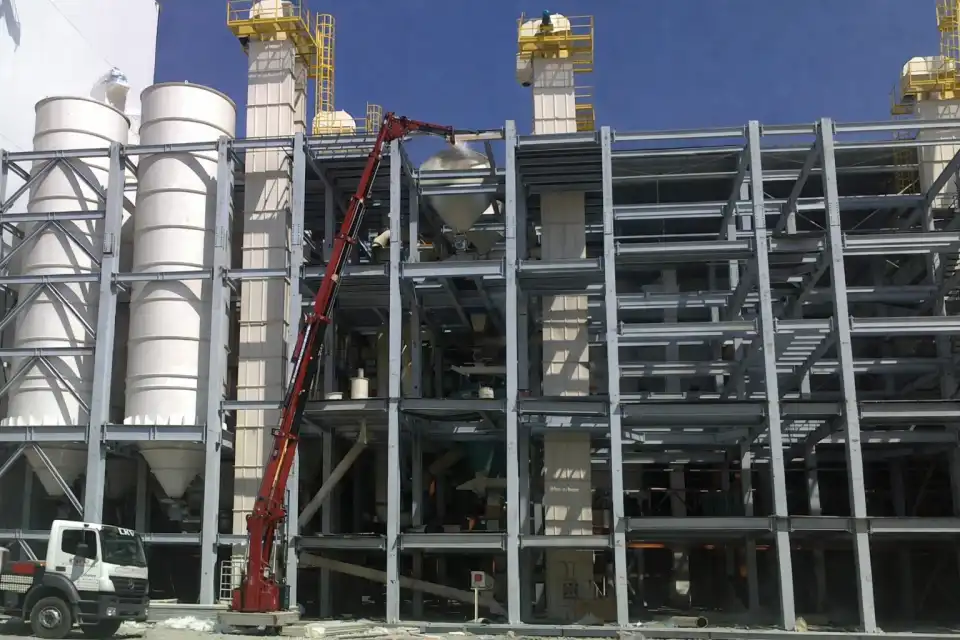
ENIVO does not select a kiln from a capacity table alone. Feed analysis, target formulation, fuel infrastructure, energy balance and downstream stages are assessed together; feeding, calciner, gas cleaning, cooling, grinding and automation are designed as one operating scenario.
Feed-specific technology selectionMass and energy balanceControlled phases and repeatable quality
Bring your project to life with ENIVO engineers enivosystems.com
Request a Quote enivosystems.com 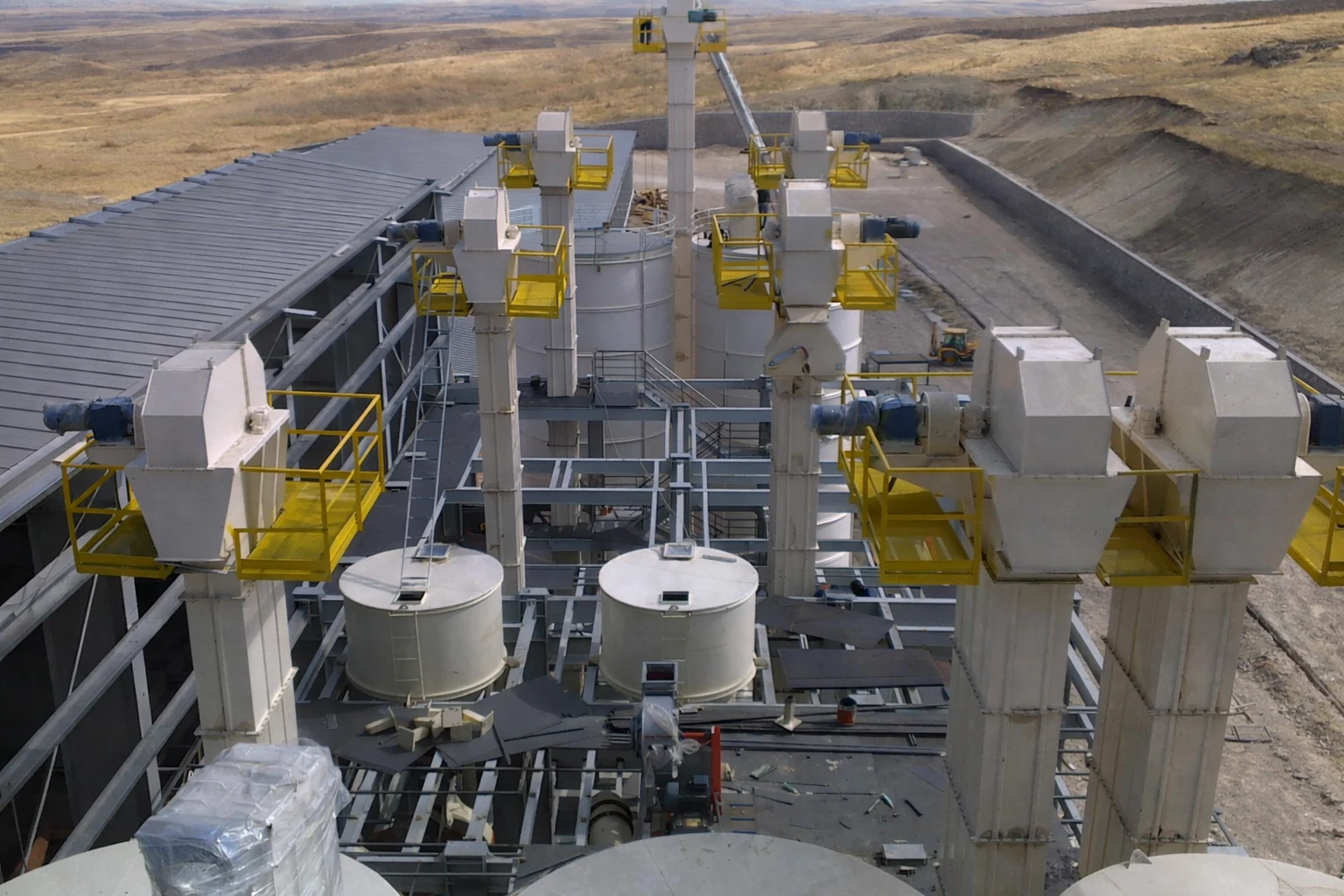
ENIVO’s gypsum calcination plants are designed to convert raw gypsum (CaSO₄·2H₂O) into high-quality stucco (CaSO₄·½H₂O) through carefully controlled, heat-managed processes. The process precisely manages drying, controlled removal of crystal water, and, when required, advanced phase transformations, enabling the consistent production of beta hemihydrate or alpha hemihydrate for gypsum plaster, gypsum board, and specialty building materials.
However, an efficient gypsum plant is not limited to the calcination unit alone. ENIVO approaches the entire production line as an integrated system, from raw material preparation to calcination, cooling, mixing, and final product packaging. This approach helps ensure consistent product quality, smooth interaction between process stages, and improved overall plant efficiency.
Explore Calcination Types
Process Approach
01
Success in gypsum production depends not only on temperature levels, but also on the characteristics of the raw material, the target end product, and the proper configuration of downstream processes. Natural gypsum and synthetic gypsum are both widely used in the industry; however, these materials have different properties and therefore require different calcination approaches. For this reason, ENIVO designs each process not only based on capacity requirements, but also in accordance with the characteristics of the raw material and the desired product formulation.
02
Continuous cooling of stucco after calcination creates more stable operating conditions for subsequent process stages. This contributes to more controlled and repeatable results, especially in mixing, additive dosing, and bagging operations.
Integrated Plant Scope
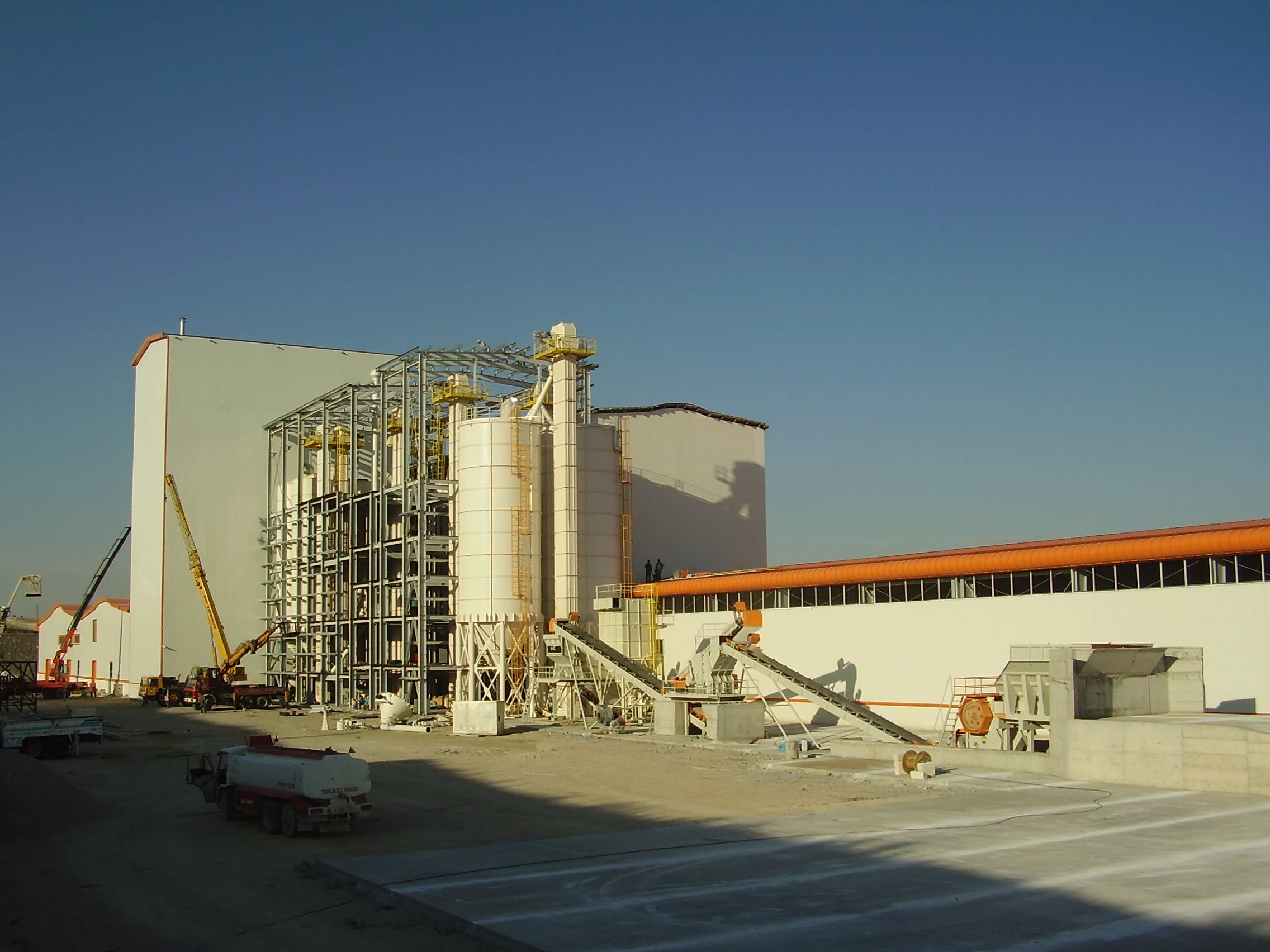
Depending on project requirements, ENIVO gypsum calcination plants can be configured to include the following process stages:
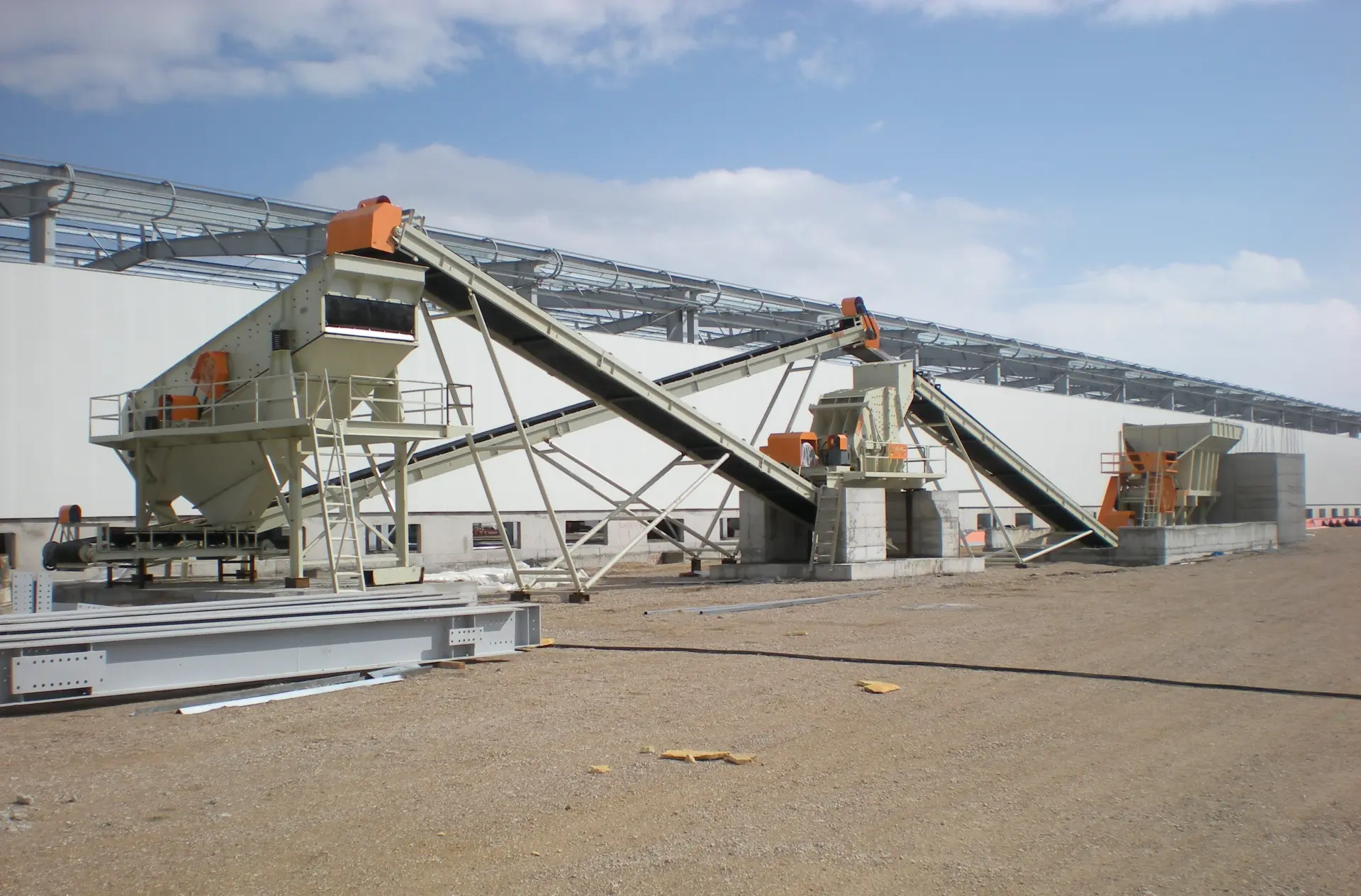
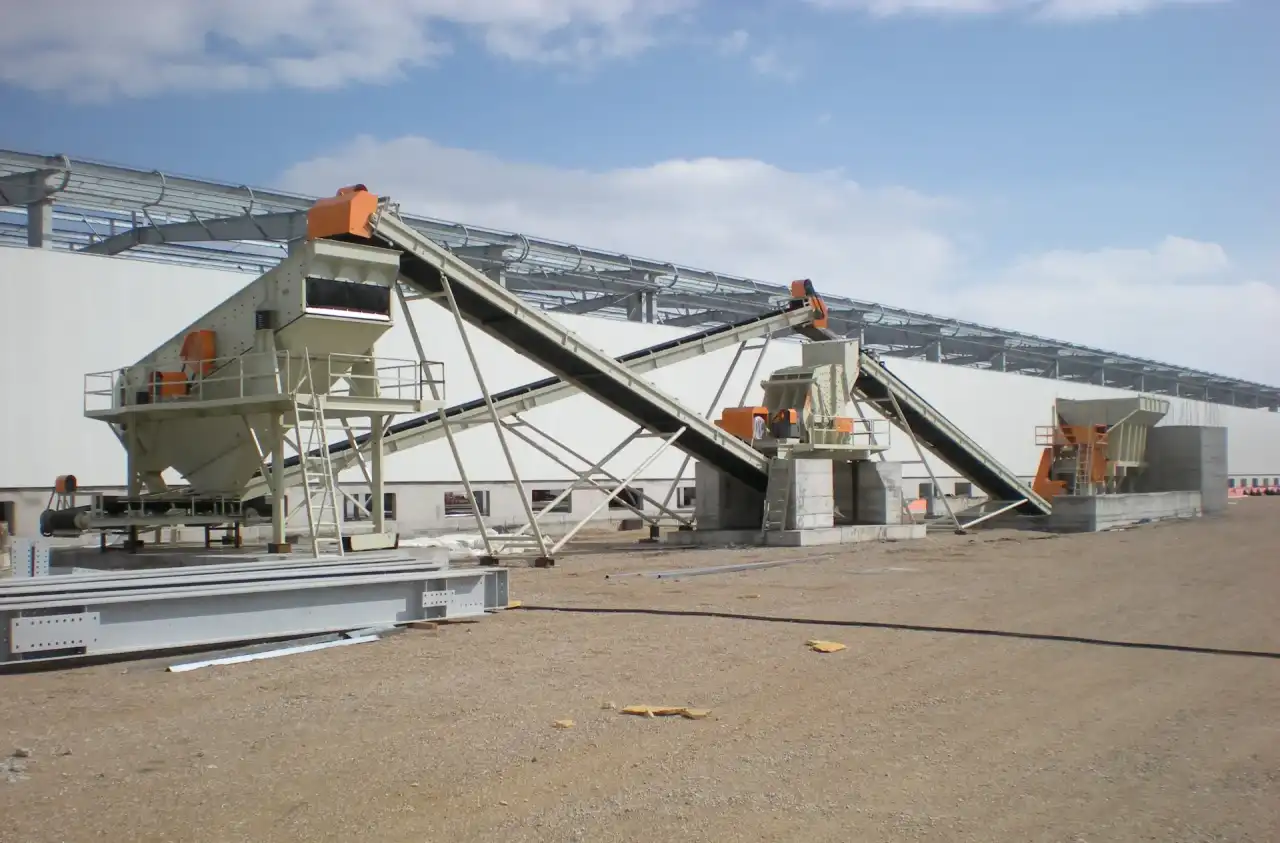
1Raw material feeding, crushing, grinding, and conveying systems
2Calcination unit
3Stucco cooling systems
4Additive dosing and mixing systems
5Final product storage, filling, and bagging solutions
6Optional waste recovery and process integration
This integrated approach enables the line not only to produce, but also to maintain the targeted product characteristics more consistently.
Key Features
- Controlled heat-based process for converting raw gypsum into high-quality plaster
- Precise process control through drying, controlled removal of crystal water, and product-specific phase management
- Calcination equipment options such as rotary kilns and vertical kilns for different capacities and product targets
- High thermal efficiency and reduced fuel consumption thanks to low exhaust gas temperatures
- Advanced automation infrastructure with real-time monitoring of temperature, humidity, and process parameters
- Flexible operation with natural gas, liquid fuel, or indirect heating options
- Process configuration suitable for feed sizes from 0 to 10 mm
- Standard kiln alternatives for capacities of up to 1,000 tons per day
- Plant design capable of integrating raw material preparation, grinding, and conveying systems
- A holistic line concept including stucco cooling, mixing, and bagging after calcination
ENIVO
Solutions Tailored to Raw Material and Final Product
In gypsum production, selecting the right technology must be based on the source of the raw material and the characteristics of the desired final product. Raw materials of natural or synthetic origin may behave differently. Likewise, the production of gypsum plaster, gypsum board, or specialty building materials requires different levels of process sensitivity. Therefore, proper process design depends not only on the equipment itself, but also on the right engineering approach.
Continuous Calcination
When is a rotary calcination kiln the right choice?
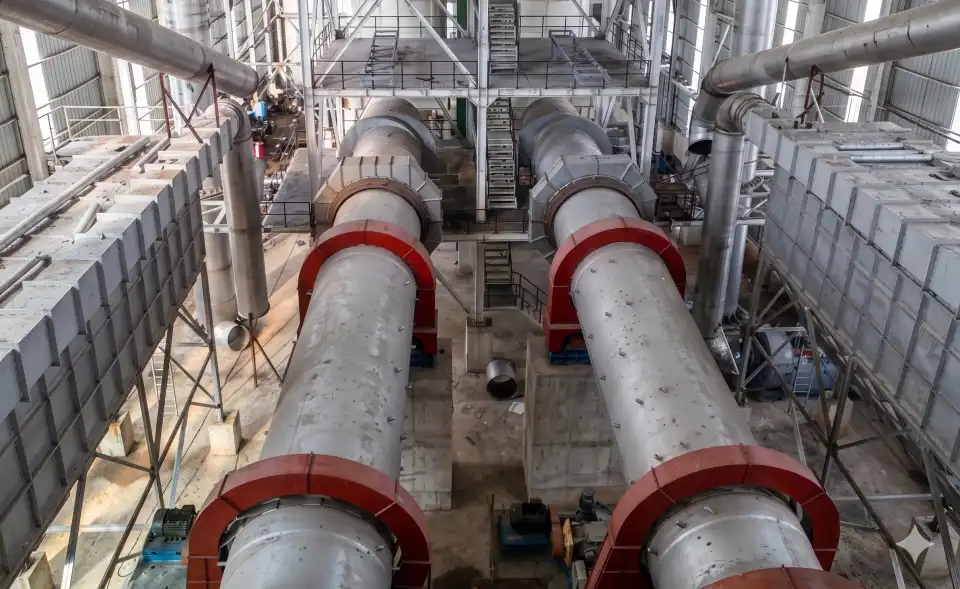
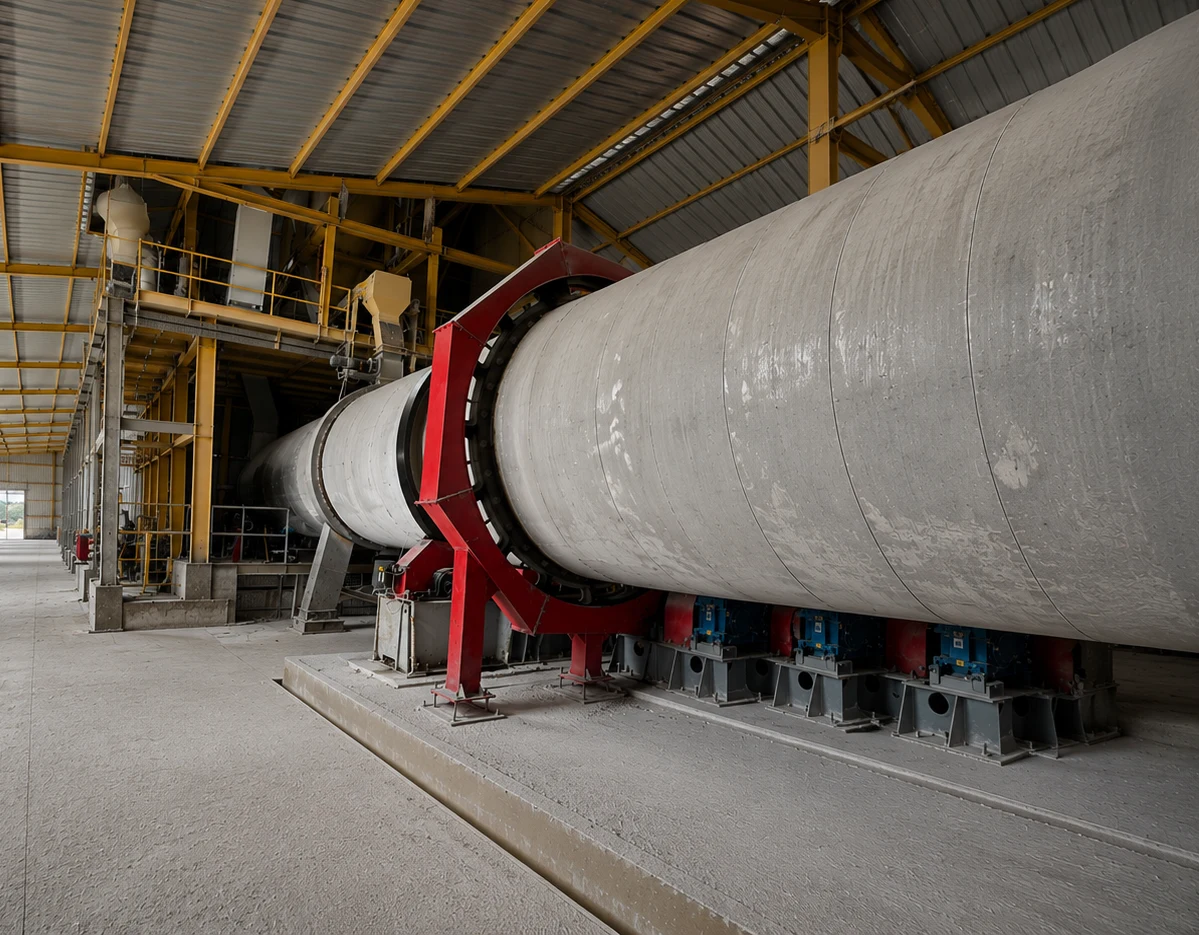
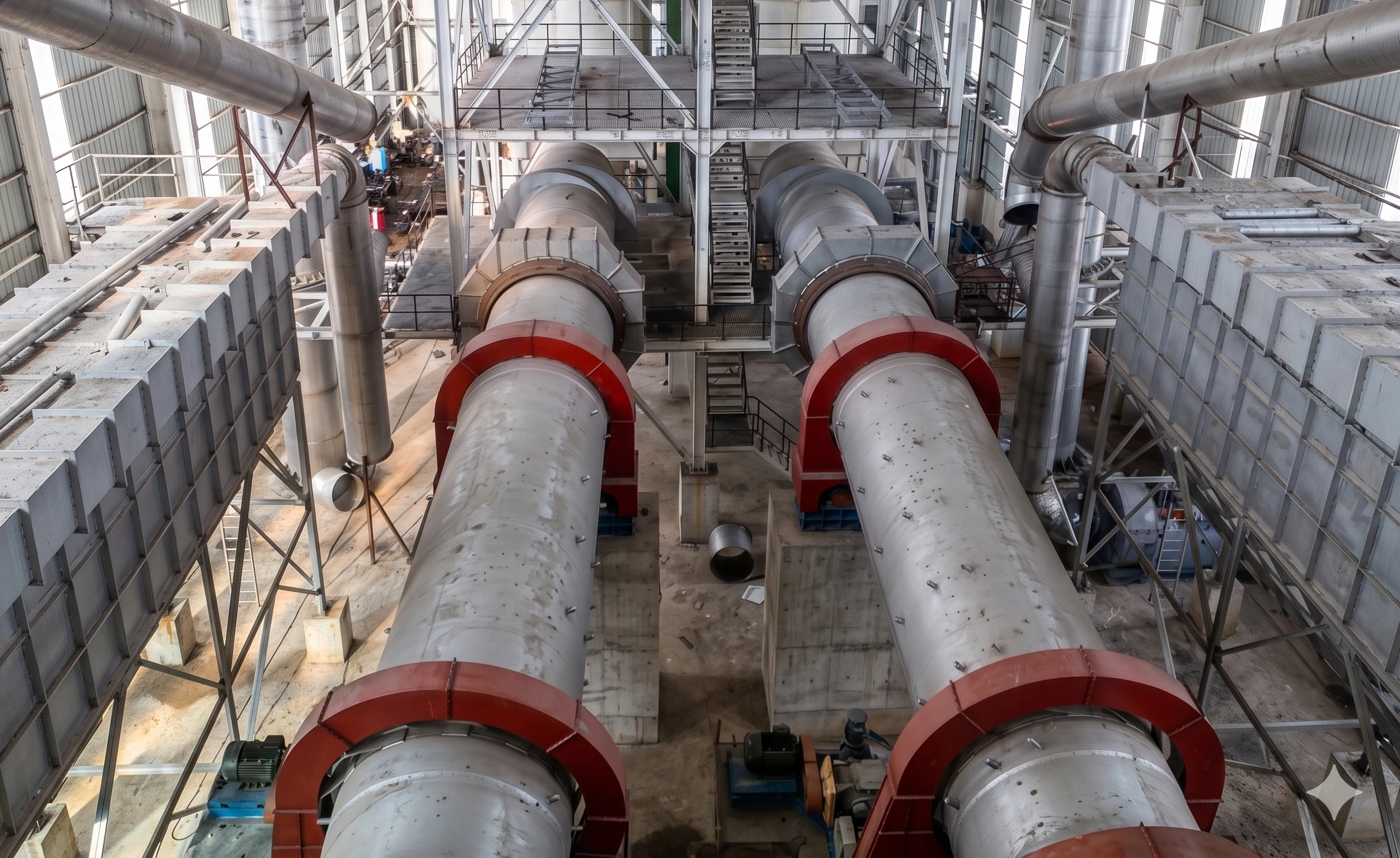
A rotary calcination kiln continuously advances material through a rotating drum, with heat transfer and residence time adjusted to the process target. Its long, controllable process path can create a flexible operating window for different feed scenarios, capacities and product formulations.
01
Controlled residence time
Drum speed, inclination, fill level and feed rate establish the product residence profile in the active thermal zone.
02
Gas-to-solids contact
Gas flow, material curtain and internal design influence heat transfer and product uniformity.
03
Line integration
Feeding, burner or heating system, dedusting, cooling and grinding are connected to one process-control logic.
 ENIVO / ENGINEERING
ENIVO
What makes ENIVO's rotary-kiln approach different?
ENIVO treats the rotary kiln as the process core that defines product behaviour, not as a standalone machine. Kiln geometry, feeding and heating are coordinated across the line against feed variability, capacity, phase balance and maintenance access.
Application-specific kiln geometryIntegrated cooling and dust managementRecipe-linked automation sets
Bring your project to life with ENIVO engineers enivosystems.com
Request a Quote enivosystems.com ENIVO Rotary Calcination Kilns are designed for the continuous, controlled, and efficient calcination of gypsum rock in high-capacity gypsum production lines. As the material moves through the kiln in a controlled manner and the temperature profile is managed evenly throughout the process, stable process conditions and consistent product quality can be achieved in large-scale production.
This technology offers a strong solution for gypsum calcination with its continuous operating capability, high-capacity design, and flexible configuration adaptable to different process requirements.
Process Description
01
In a rotary calcination kiln, gypsum rock is continuously fed into the kiln through a controlled feeding system and subjected to a temperature-controlled calcination process as it moves through the rotating cylindrical body. Thanks to the rotary structure, the material remains in continuous motion, is mixed, and stays in contact with the hot gas stream throughout the process.
02
The feeding system ensures that gypsum rock is introduced into the kiln at a controlled and adjustable rate. Inside the rotary kiln, the material moves in the same direction as the hot gas flow while being continuously redistributed and exposed to the hot gas. This structure helps different particle sizes remain in the kiln for the duration required for proper calcination. Fine material generated during the process and dust collected in the filter can be reintroduced into the process through a suitable line configuration, supporting product efficiency.
03
Inside the kiln, the material is subjected to thermal treatment for different durations depending on particle size. Finer particles react more quickly, while larger particles remain in the kiln longer and are calcined over a longer period. This natural classification effect helps different particle sizes calcine for appropriate durations and contributes to a more balanced process.
04
During calcination, crystal water is removed in a controlled manner, and at the end of the process, gypsum rock is converted into calcined gypsum / hemihydrate in line with the targeted quality criteria. The temperature distribution and residence time inside the kiln can be adjusted according to product requirements, allowing the process to be optimized for capacity and product characteristics.
Technical Data
Capacity
100–1.000 tons/day
Process
Continuous and controlled calcination
Feeding system
Continuous and adjustable feeding system
Heating system
Design suitable for different fuel and heating scenarios
Process control
Residence time and temperature profile optimized according to the target product
Key Advantages
- Operating principle suitable for continuous production
- Stable process performance in high-capacity applications
- Consistent product quality through homogeneous temperature distribution
- Flexible process structure adaptable to different raw material and capacity requirements
- Optimization of product properties through controlled residence time
- Suitability for plaster production with optimizable setting time and product behavior
- Process structure suitable for operation without pre-drying
- Flexible raw material use with wide feed particle size tolerance
- Structure suitable for improving energy efficiency through heat recovery
- Reliable operating structure for large-scale plants
System Features
- Cylindrical rotary kiln body
- Mechanical structure suitable for continuous material flow
- Burner and heating infrastructure suitable for controlled temperature management
- Drive and speed control system designed according to process requirements
- Durable steel construction and wear-resistant internal structure
- PLC-based process control infrastructure
Compact Calcination
When does a vertical calcination kiln stand out?
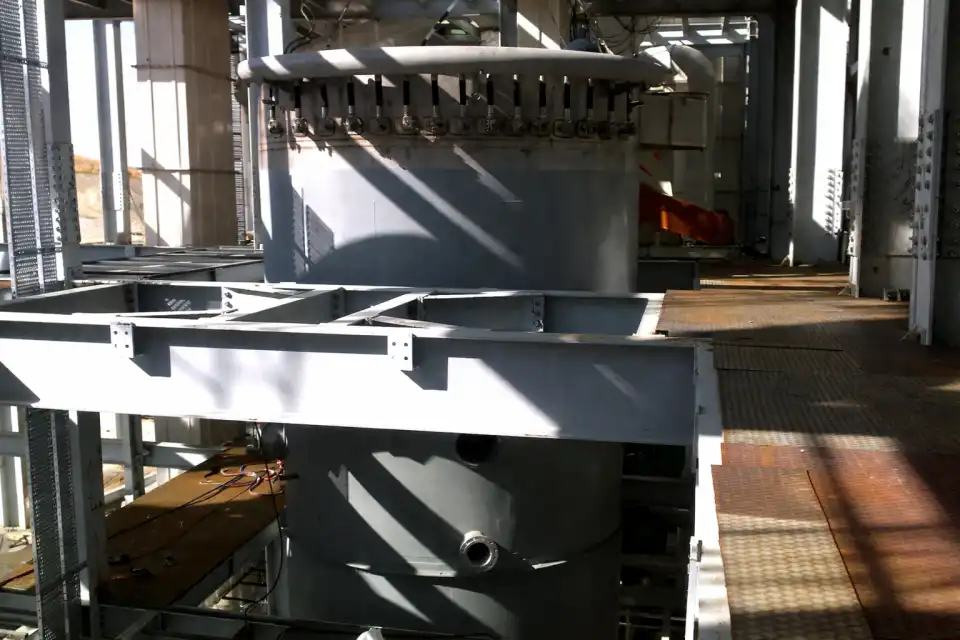
A vertical calcination kiln is a compact solution in which well-prepared, stable feed is thermally processed through a controlled vertical flow. Reliable operation depends on managing feed continuity, material flow, pressure balance, temperature profile and controlled discharge as one system.
01
Compact layout
The vertical process architecture supports integration of feeding and thermal equipment where ground area is limited.
02
Stable feed
A controlled particle-size and moisture distribution allows gas-to-solids contact and repeatability to be managed more precisely.
03
Pressure and temperature
Multi-point measurement and controlled discharge provide critical feedback for balanced heat transfer through the kiln.
 ENIVO / ENGINEERING
ENIVO
How does ENIVO secure a vertical-kiln line?
ENIVO begins vertical-kiln performance with feed preparation. Crushing and classification, metered feeding, heating, pressure-temperature control, discharge, cooling and dedusting are engineered within one process architecture.
Design beginning with feed preparationCompact, maintainable layoutProcess-data-driven controls
Bring your project to life with ENIVO engineers enivosystems.com
Request a Quote enivosystems.com 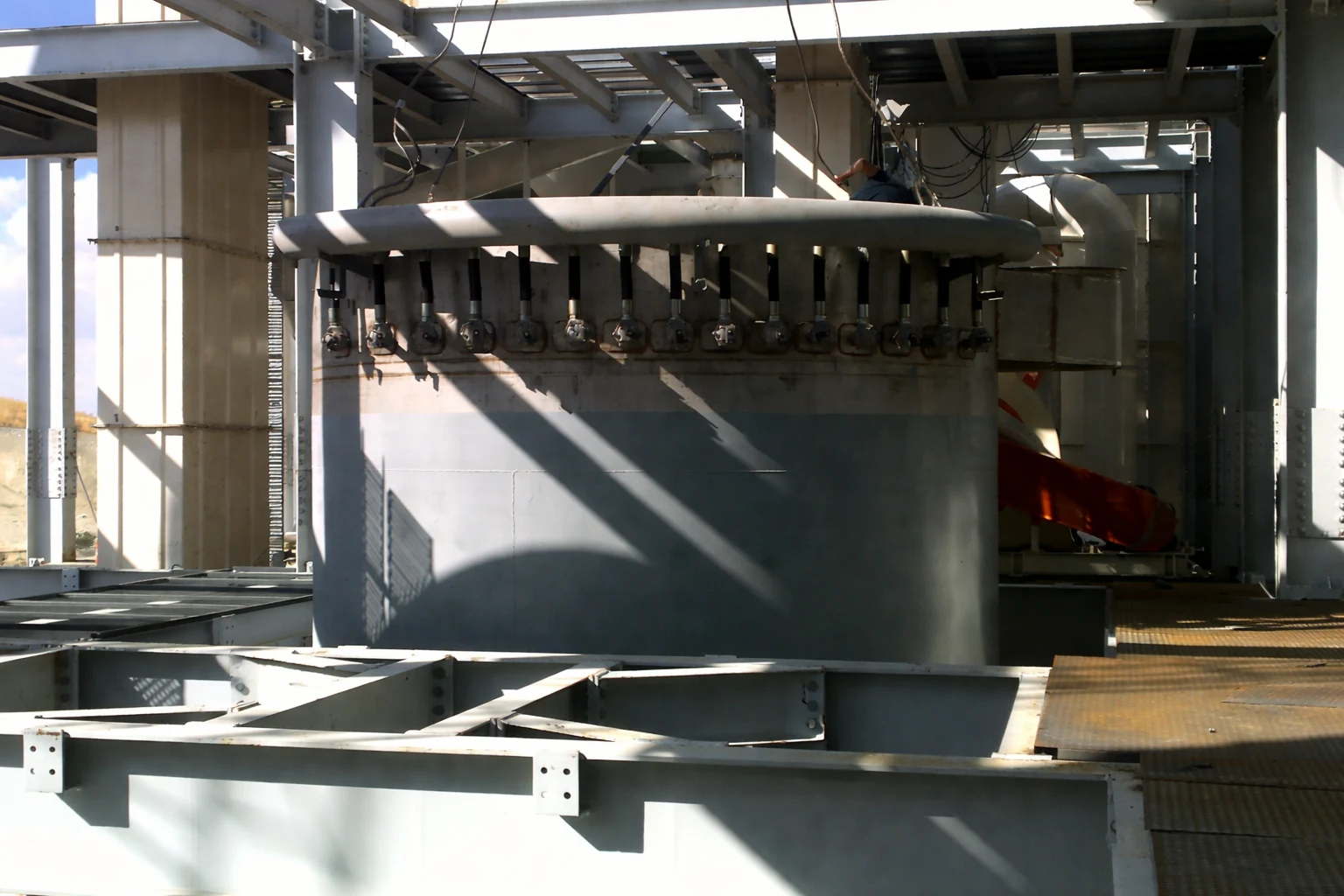
ENIVO Vertical Calcination Kilns are designed to convert gypsum rock into high-quality calcined gypsum through a slow and precisely managed calcination process. Direct contact between the material and hot gases enables efficient heat transfer throughout the process and supports the targeted final product properties.
This technology stands out as an efficient calcination solution with low energy consumption, a simplified plant structure, and low maintenance requirements. The high-strength potential, optimized setting behavior, and quality consistency of the resulting product make it a suitable process infrastructure for both plaster and plasterboard production.
Process Description
01
In a vertical calcination kiln, crushed gypsum rock with a suitable particle size is fed from the upper section of the kiln and moves downward vertically. Hot combustion gases generated in the internally fired system move in the opposite direction to the gypsum rock and pass through the material bed. This counter-current gas–material movement creates intensive contact between gypsum rock particles and hot gases, enabling effective heat transfer.
02
Throughout calcination, the internal kiln pressure helps the hot gases pass through the material bed in a controlled manner. The process takes place at approximately 350–400 mbar and is continuously monitored by temperature and pressure measuring instruments installed on the kiln. The PLC automation system monitors process temperature and internal kiln pressure, contributing to reliable operating conditions.
03
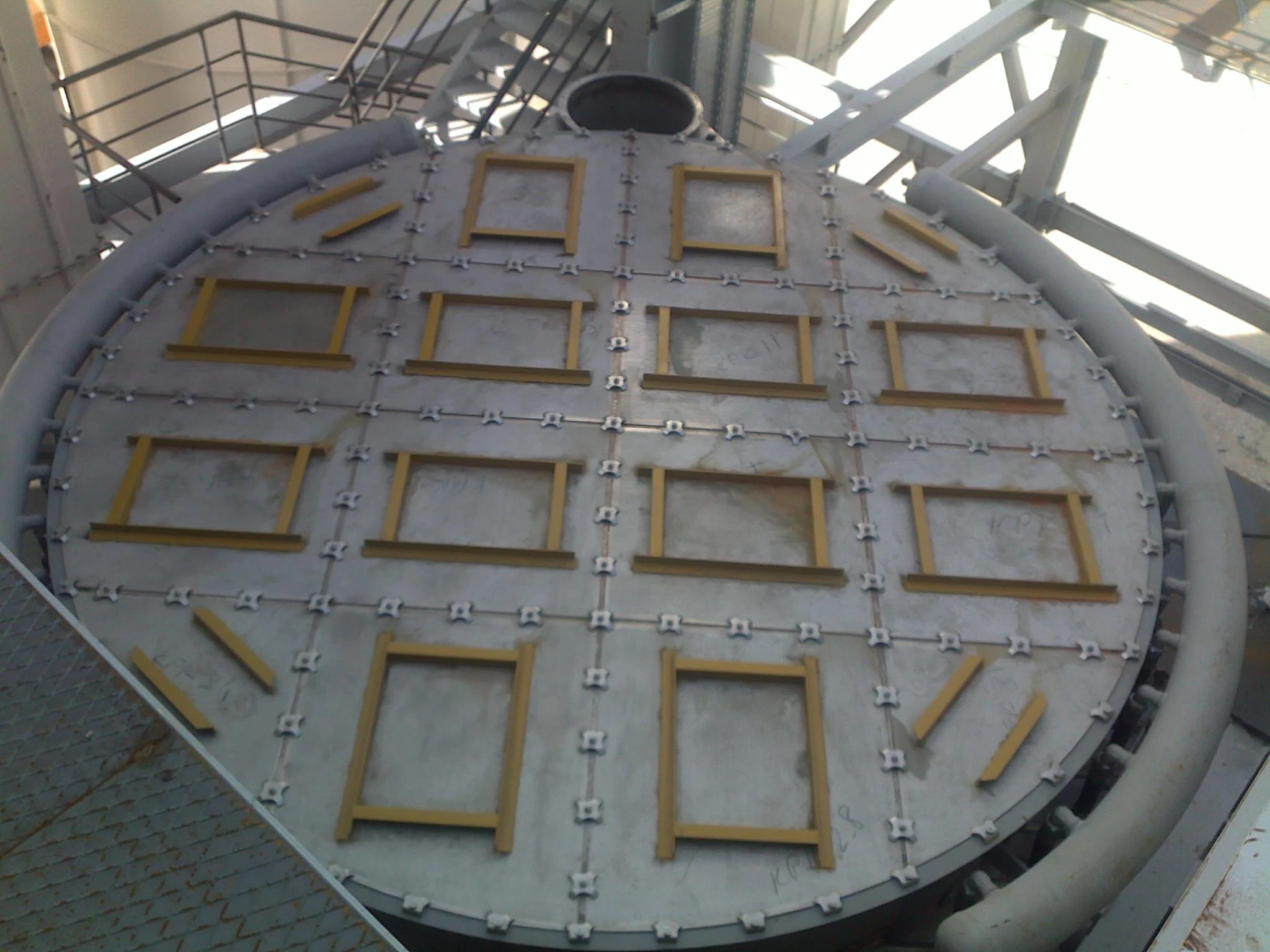
The bag filter located at the upper section of the kiln enables hot gas and vapor to be discharged from the system in an orderly manner. By utilizing the internal kiln pressure, this structure eliminates the need for a large additional extraction fan and creates a simpler, more energy-efficient system configuration.
04
At the end of the process, the calcined gypsum is discharged from the lower section of the kiln. Temperature management, counter-current gas contact, and pressure-assisted process conditions make it possible to remove crystal water in a balanced manner and manage the product phase structure within the targeted range.
05
Vertical kiln technology enables the production of calcined gypsum with approximately 80–85% beta gypsum and 15–20% alpha gypsum characteristics. The alpha gypsum character in the product structure contributes to higher final product strength.
Technical Data
Capacity
6–18.5 t/h
Process pressure
Approximately 350–400 mbar
Specific thermal energy consumption
<190 kcal/kg gypsum
Final product character
Approximately 80–85% beta gypsum, 15–20% alpha gypsum
Product suitability
Suitable for plaster and plasterboard production
Process control
PLC-based control with temperature and pressure measurement
Key Advantages
- Efficient heat transfer through internally fired, counter-current process design
- Regular hot gas passage supported by controlled internal kiln pressure
- No rotating main equipment due to the static operating principle
- Long equipment life with low wear risk and reduced maintenance needs
- Lower energy consumption compared to rotary kilns
- Higher product strength supported by the alpha gypsum character
- Suitability for plaster and plasterboard production through optimized setting time and product behavior
- Simpler system configuration and reduced extraction fan requirement with integrated bag filter design
- Space-saving kiln design that can be easily integrated into existing plants
- Fast commissioning advantage with short installation time
System Features
- Internally fired vertical kiln structure
- Counter-current hot gas and material movement
- Integrated bag filter at the upper section
- Temperature and pressure measuring instruments inside the kiln
- PLC automation and process control infrastructure
- High-temperature-resistant steel construction
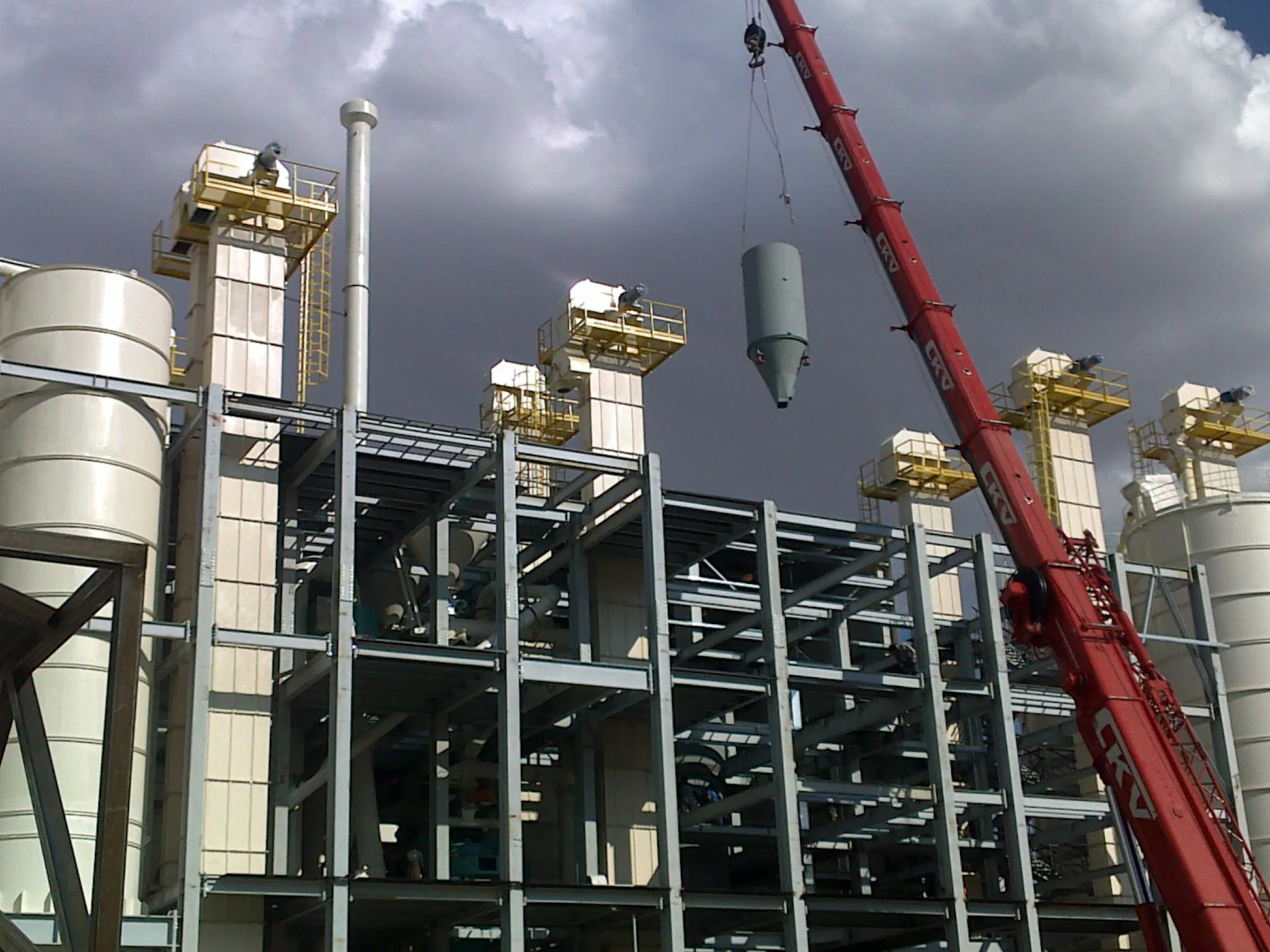
- Installation structure suitable for steel platforms
- Static kiln design with low mechanical wear
- Controlled product discharge from the lower section of the kiln
Continuous Board Production
How does a plasterboard production line work?
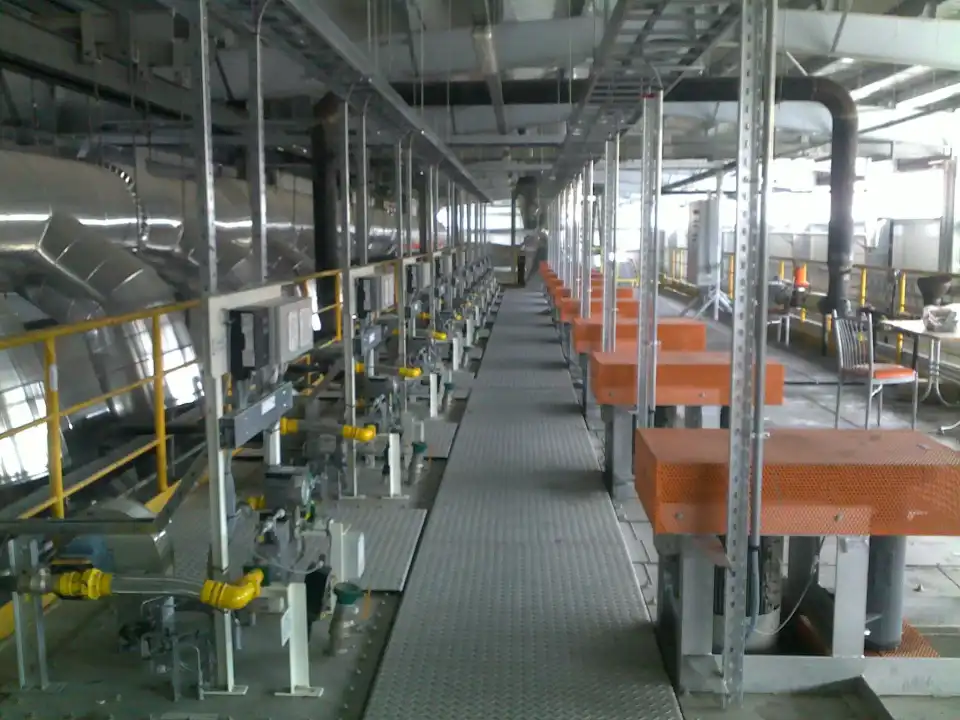
A plasterboard line is a highly automated production system in which calcined gypsum is continuously mixed with water and additives, formed between two paper liners, allowed to set, cut, dried in a multi-zone dryer, trimmed, stacked and prepared for packing.
01
Recipe and slurry
Precise dosing of stucco, water, foam and additives connects density, setting time, strength and line speed.
02
Forming and setting
Paper tension, edge formation, board thickness and setting-belt conditions determine dimensional quality.
03
Zoned drying
Temperature, airflow and humidity must remove free water without paper delamination, surface defects or internal stress.
 ENIVO / ENGINEERING
ENIVO
Why engineer a complete plasterboard plant with ENIVO?
ENIVO integrates the entire line around one quality objective: additive preparation and precision dosing, mixing, paper handling, forming, cutting, multi-deck drying, trimming and packing. Managing mechanical, electrical and automation interfaces under one engineering responsibility strengthens commissioning and production stability.
Holistic design from recipe to line speedDryer and energy optimisationAutomation informed by quality data
Bring your project to life with ENIVO engineers enivosystems.com
Request a Quote enivosystems.com Gypsum board production is based on a continuous manufacturing structure in which multiple process stages must operate in precise coordination. The balanced control of slurry preparation, paper feeding, board forming, setting, drying, cutting, and stacking directly affects both product quality and overall line efficiency.
ENIVO approaches gypsum board production plants not as a collection of individual machines, but as integrated process solutions that define both product performance and production continuity. This approach supports the development of more controlled, efficient, and sustainable production infrastructures for new investments as well as for capacity expansion and modernization projects.
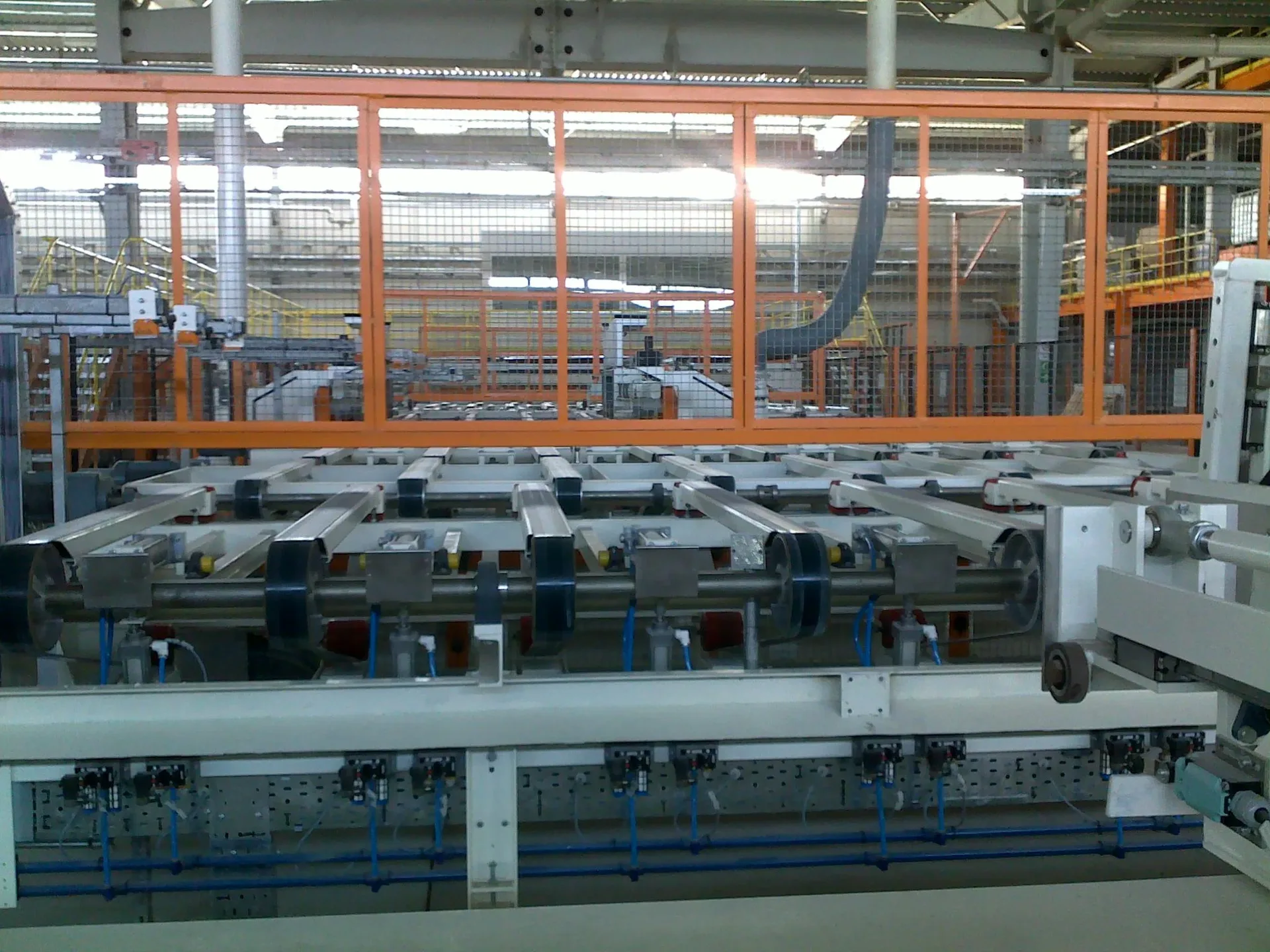
Process Approach
01
The gypsum board production process begins with the mixing of calcined gypsum, water, and suitable additives. The prepared slurry is then formed into a continuous board structure together with the facing papers on the production line. After controlled setting, the board is cut and transferred to the drying section. Following drying, the process is completed through cooling, transfer, stacking, and packaging stages.
02
Within this structure, the key factors that determine product quality are slurry homogeneity, consistency of board geometry, stability of paper feeding, drying profile, and overall line synchronization. ENIVO engineers all sections of the production line to support these parameters together, creating a more controlled and consistent production process at every stage.
Technical Data
Production type
Continuous gypsum board production line
Board thickness
Configurable according to project and product type
Line width
Can be defined according to target board dimensions
Drying system
Multi-zone board dryer
Line configuration
Integrated structure consisting of slurry preparation, forming, drying, cutting, and stacking sections
Automation
System design suitable for fully integrated process control infrastructure
Key Features
- Line structure suitable for continuous and stable production
- Controlled board geometry and consistent product structure
- Flexible process configuration adaptable to different product types
- Balanced moisture management through a multi-zone drying system
- Automation-supported quality and process control
- Scalable system design suitable for high-capacity production
- Suitable structure for new plants, modernization, and capacity expansion projects
Products That Can Be Produced
ENIVO Gypsum Board Production Plants can be configured for different board types according to target market requirements and performance expectations. These may include:
Standard gypsum boardMoisture-resistant gypsum boardFire-resistant gypsum boardExterior gypsum boardLightweight gypsum board solutionsHigh-density or special-performance board types
The target product type must be evaluated together with core formulation, additive structure, paper characteristics, board thickness, and drying parameters. For this reason, achieving the right board structure depends not only on equipment selection, but on the configuration of the entire process.
Plant Scope
Depending on project requirements, ENIVO Gypsum Board Production Plants may include the following main sections:
1Calcined gypsum and additive feeding systems
2Water and additive dosing infrastructure
3Continuous slurry preparation system
4Paper feeding and guiding section
5Board forming line
6Setting and transfer section
7Length cutting systems
8Multi-zone board dryer
9Cooling, transfer, and stacking systems
10Packaging and end-of-line solutions
11Process automation and control infrastructure
Production Quality and Line Efficiency
In gypsum board production, quality is directly related to parameters such as board thickness, density distribution, surface smoothness, edge profile, drying quality, and dimensional accuracy. For this reason, stable line operation must be supported by reliable process monitoring and precise control logic at every stage.
In terms of line efficiency, not only production speed but also formulation stability, paper handling, cutting synchronization, stacking arrangement, and maintenance accessibility play a decisive role. ENIVO evaluates these factors not as isolated elements, but as parts of a whole that determine the overall performance of the line.
GYPSUM INTELLIGENCE / 01
We engineer gypsum production through material science, not equipment alone.
The right plant is the outcome of connected decisions—from feed mineralogy and target setting behaviour to thermal profile, board drying and dispatch-ready packaging. This hub turns those decisions into a clear visual engineering narrative.
01
What is gypsum?
A natural or synthetic mineral feedstock named calcium sulfate dihydrate and represented by the formula CaSO₄·2H₂O.
02
What does calcination do?
It removes a controlled portion of the crystal water and converts gypsum into reactive calcium sulfate hemihydrate.
03
What determines plant selection?
Feed moisture and purity, particle size, product recipe, capacity, fuel, automation and quality targets must be assessed together.
04
Where does the line end?
Not at filling: a complete line ends with verified quality, traceability, palletising and a dispatch-ready product.
Material Science
The closed transformation cycle of gypsum
Gypsum releases part of its water when heated and rebuilds its crystal structure when water is added again. Plant engineering makes this chemical cycle stable at industrial scale.
CaSO₄2H₂O⇄ ½H₂O
01
FEEDSTOCKGypsum dihydrate
CaSO₄·2H₂ONatural, synthetic or controlled recycled gypsum is characterised for purity, free moisture, particle distribution and impurities.
02
HEAT + CONTROLCalcination
ΔT + residence timeHeat input, product temperature and residence time are managed together to remove the target share of combined water and limit under- or over-calcination.
03
REACTIVE PRODUCTHemihydrate
CaSO₄·½H₂OThe calcined product is cooled, ground, classified and conditioned for plaster, building products or plasterboard formulations.
04
REHYDRATIONSetting and strength
+ H₂O → CaSO₄·2H₂OA crystal network grows again after mixing with water. Water demand, additives and particle structure govern workability, setting and final strength.
 01Know the feed
 02Control the heat
 03Verify the phase
/549.webp) 04Standardise the product
04Standardise the productTechnology Selection
Rotary kiln or vertical kiln?
No single technology is right for every feedstock and product. Selection should be grounded in laboratory data, operating scenarios and a process mass-and-energy balance.
Decision criterionRotary calcination kilnVertical calcination kiln
Process character
Continuous solids movement with a controllable residence-time profile
Compact vertical flow with controlled heat transfer
Feed approach
Can be configured for broader particle and feed scenarios
High repeatability with stable feed and well-prepared raw material
Layout
Longer process footprint in the horizontal direction
Compact vertical arrangement where ground area is limited
Product target
Adjustable behaviour through residence time and temperature profile
Stable thermal profile and controlled phase distribution
Integration
Integrated with drying, cooling, grinding and gas cleaning
Compact integration with feeding, cooling, dedusting and automation
Final selection is not made from a capacity table alone. Sample analysis, moisture balance, target setting time, fineness, fuel infrastructure and the operating philosophy are verified together.
Quality Architecture
Consistent product comes from four control layers that verify one another.
01
Feed intelligence
Dihydrate content, free moisture, impurities, particle distribution and feed variability are monitored.
02
Thermal window
Feed, gas and product temperatures are evaluated with residence time, pressure and air-to-fuel balance.
03
Product verification
Phase composition, fineness, free moisture, setting, spread and strength targets are checked by scheduled sampling.
04
Line feedback
Laboratory and production data are fed back into recipe, dosing, grinding and calcination setpoints under controlled procedures.
Project Roadmap
One engineering chain from sample to start-up
01
Feedstock characterisation
Mineralogy, chemistry, moisture and particle structure
02
Product definition
Recipe, quality standard and market expectation
03
Process design
Mass balance, energy balance and equipment sizing
04
Detailed engineering
Layout, steel, electrical, automation and safety
05
Manufacturing and integration
Quality plan, interface management and site logistics
06
Commissioning
Cold/hot tests, performance verification and training
Technical Glossary
A common language for the gypsum process
A–Z
Dihydrate
Raw gypsum phase carrying two water molecules in its crystal structure.
Hemihydrate
Reactive binder phase formed after calcination and capable of rehydration.
β-hemihydrate
Porous crystal form commonly produced by dry calcination and widely used in building plasters.
α-hemihydrate
Denser crystal form with lower water demand and high-strength application potential.
Anhydrite
General name for calcium sulfate phases without crystal water.
Calcination
Controlled removal of combined water through thermal input.
Setting time
Time window in which a gypsum-water mix changes from workable to hardened.
Residence time
Time spent by the material in the active thermal or process zone.
Phase balance
Distribution of dihydrate, hemihydrate and anhydrite for the target product.
Free moisture
Water not chemically bound in the crystal structure and removable by drying.
Specific energy
Thermal or electrical energy consumed per unit of product.
Closed-loop recycling
Processing gypsum waste for reuse as feedstock in new gypsum products.
Expert Answers
The questions most often asked when planning a gypsum plant
The direct answer comes first; the engineering reasoning follows. Built to accelerate pre-feasibility decisions.
 ENGINEERED ANSWERS
Annual sales volume is not enough. Operating days and hours, product mix, planned downtime, feed moisture, recycle rate and expansion scenarios are used to calculate net and peak capacity separately.
Yes, if the preparation system and operating window are designed accordingly. Moisture, purity, crystal structure and impurities differ, so laboratory validation and feed-specific settings are required.
The key difference is crystal morphology, not the chemical formula alone. Beta hemihydrate generally has higher water demand and broad building-plaster use; alpha hemihydrate has denser crystals and higher strength potential.
Feed variability, free moisture, particle size, temperature profile, residence time and cooling conditions act together. A single temperature reading is never sufficient.
Stucco and additive preparation, precision dosing, continuous mixing, paper handling, forming, setting belt, cutting, multi-deck drying, trimming, stacking and packaging.
It must remove free water without surface defects, paper delamination or internal stress. Zoned temperature, airflow and humidity directly affect board quality and energy use.
Crushing, transfer, grinding, cooling and packing points are connected to enclosed extraction; filter area, conveying velocity, pressure control and recovery are designed as part of the process.
Production scrap and clean construction or demolition gypsum can be reused at a validated ratio after separation, contaminant control and size reduction. The ratio depends on recipe and local standards.
Low exhaust losses, insulation, optimised excess air, heat recovery, stable feeding, correct equipment sizing and advanced controls must be addressed together.
A project-defined integrated delivery model covering feasibility, process design, mechanical/electrical automation, manufacturing, installation, commissioning, performance tests and operator training.
ENIVO coordinates feedstock characterisation, process selection, mechanical-electrical-automation engineering, equipment interfaces, commissioning and training under one technical responsibility. Equipment is therefore engineered as an integrated system serving product quality and reliable operation, rather than as isolated packages.
Feed analysis and moisture, target products and quality values, capacity, fuel and electrical data, site conditions, packaging format, automation expectations and layout constraints form the starting dataset.
Contact
Ready to Start Your Gypsum Project?
Share your production targets and let us design the most suitable process solution for you — from raw material to final product.